
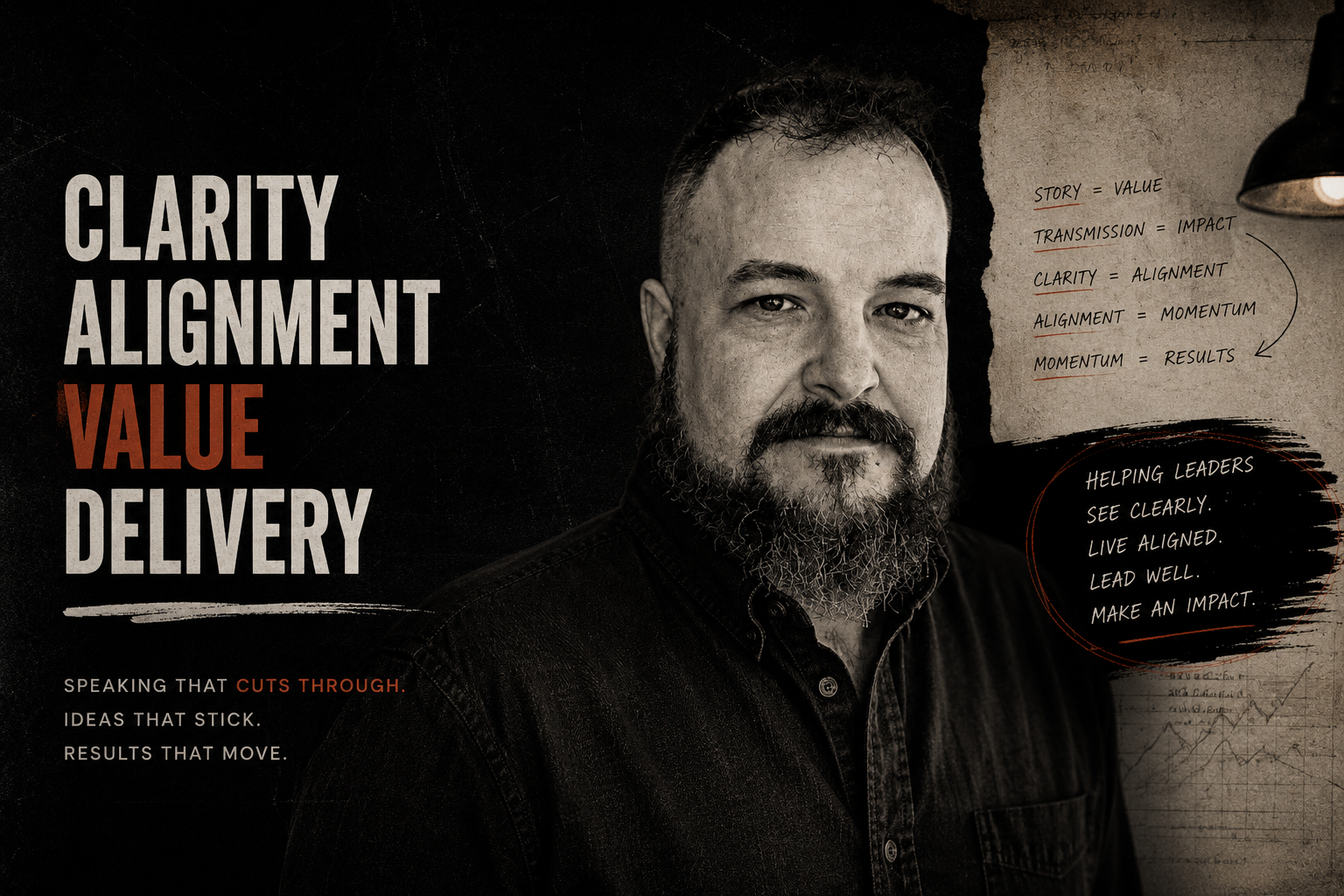
On Your Stage
For a room full of business people.
Chambers, associations, conferences, leadership gatherings. Hand Ken a mixed room and he'll find each person where they're standing. The talk adapts to who's in the seats.
Talk About Your Event →Speaking / Workshops / Interviews
Whether it's your stage, your conference, or your podcast audience, the job is the same: give your people something they'll still be using on Monday, and make the room glad they showed up. Talks that land, not inspiration that evaporates.
Start a Speaking Conversation
What Your Room Gets
Most business talks feel good for an hour and disappear by Monday. The goal here isn't a high that fades. It's recognition. Ken helps a room name the thing they've been living inside but couldn't put words to: where their business is working harder than it should, where real value is getting lost, and what it would take to change it.
They don't leave hyped. They leave clearer, with shared language and at least one idea they can actually use. Which is what makes a room glad they came, and makes the person who booked it look good for bringing him in.
Two Ways In
Two different rooms, the same job: meet the audience where they actually are.
On Your Stage
Chambers, associations, conferences, leadership gatherings. Hand Ken a mixed room and he'll find each person where they're standing. The talk adapts to who's in the seats.
Talk About Your Event →On Your Show
Podcasts and interviews. When you've built a room around a theme, Ken goes deep on the version of this that's alive for your specific listeners.
Talk About Your Show →Who's In Your Room
Every room is a mix. Some people are years into the gap. Some are just starting to notice it. Some have been sitting with the same unasked question for a decade. Ken doesn't pitch to the lowest common denominator. He names the experience that different people in the room are actually having.
Here's who Ken is talking to, whoever happens to be in the seats:
Working hard to get better, doing everything right by the standard they were handed. But starting to feel like the standard isn't quite the right one.
Been at it long enough to believe the ceiling is real. Not giving up. Just not expecting it to open. Ken's job with this person is to introduce a question they stopped asking.
Knows exactly what the business could become. Has been saying so for three years. Something is in the way they haven't been able to name yet. Name it and the whole conversation changes.
Different people. Same gap. Ken's job is to help each of them see it, and see that it's closer than they think.
Let's talk about your audience →Why It Matters Who You Book
Your audience gave you their time. The speaker you choose is the return you hand them on it. A talk that's all energy and no substance doesn't just fall flat in the room. It spends trust you worked hard to build, and it follows your name, not the speaker's.
The bar isn't "did they enjoy it." It's "are they still using it next week." That's the difference between a slot you filled and a session people remember you for.
Where This Comes From
The talks are practical on purpose, but they're not improvised. Underneath them is one idea Ken has spent two decades building: a business is communication made physical. Value starts as something one person sees: a better way, a real advantage, a thing worth paying for. The whole business exists to carry that value, intact, to the people who need it. The offer carries it. The team carries it. The pricing, the systems, the story: each one either carries the value or quietly loses it on the way.
Most business problems aren't value problems. They're transmission problems.
The value is real; it's just not arriving. A talk shows the room where their own value is getting lost in transit, and once a room can see that, they can't unsee it.
Ken can go as deep on this as a room wants. Most don't need the whole architecture. They need one clear look at where their own value is leaking. But the floor is real, and it's why the practical talk holds up under weight your audience may not even consciously test.
Speaking Proof
Proof that when he's in a room, the people in it leave with something they can use.
Live-Room Range
Ken has taught and spoken across small groups, training rooms, conferences, recurring platform settings, and large rooms. Range matters because the work has to land with real people, not just look good on a slide.
Audience Trust
Years of long-form audio conversation, a niche audience built from zero, and a following that grew through clear language and live thinking, not hype.
Designed Rooms
Ken has designed conferences, session structures, interactive teaching systems, and custom curricula. He understands how a room's rhythm, questions, and follow-up shape what people actually carry home.
Real Operating Ground
The talks draw on real work: a wedding venue, a cattle operation, events, businesses built and rebuilt. The room gets grounded examples instead of abstract consultant language.
How Booking Works
A short conversation about who your audience is and what you want them to walk away with.
The talk gets shaped to your audience and your theme, not pulled off a shelf.
A session that lands in the room and follows them home, and a booking that makes you look good for making it.
Next Step
Whether it's a stage, a show, or something that doesn't fit neatly into either, the best first step is a short conversation about your audience and what you want them to walk away with. The right talk is the one built for the room you're actually filling.
Start a Speaking Conversation