
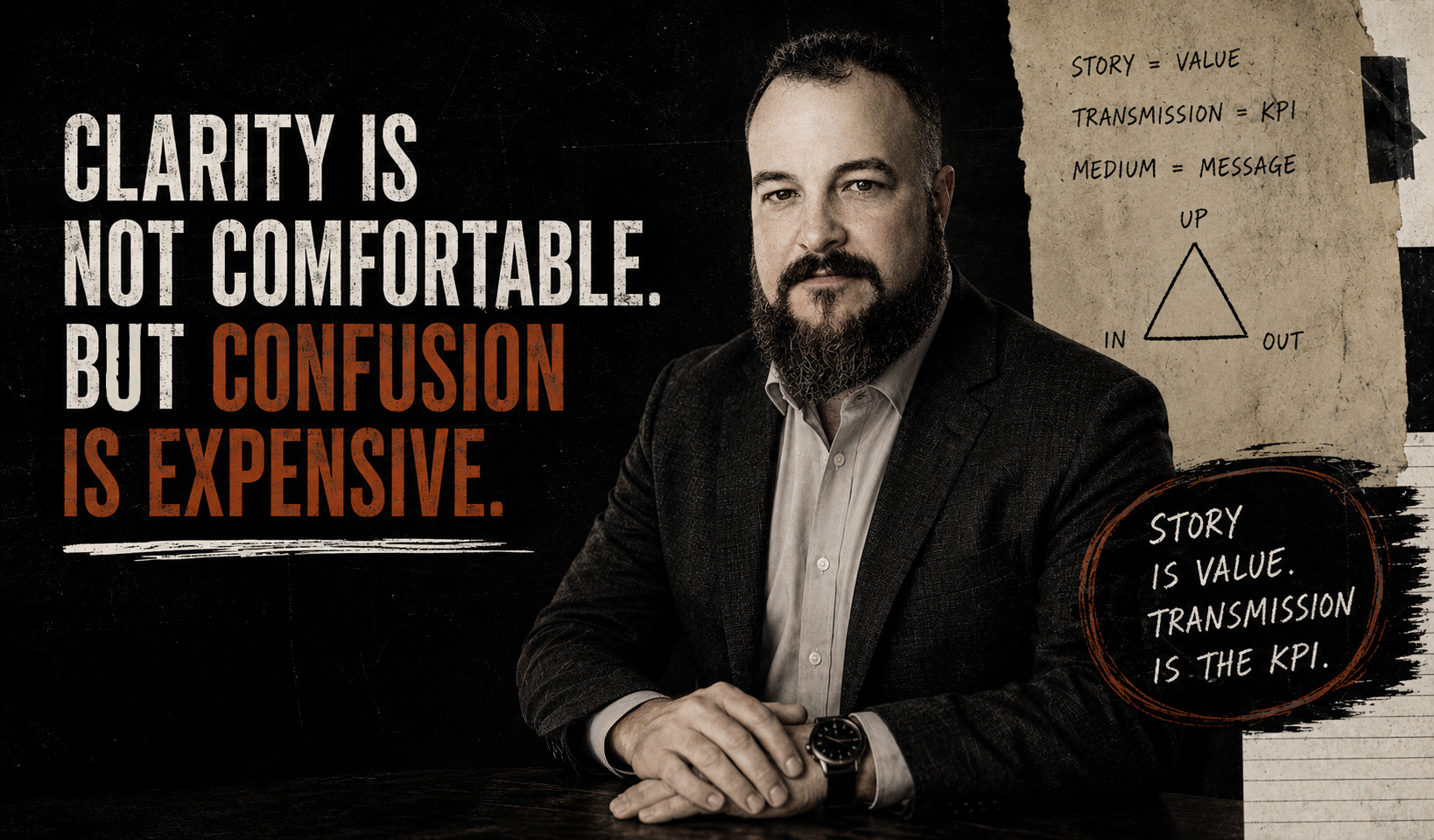

Your problem is rarely your problem.
You're the best. You're not paid like it.
Money comes. As long as you grind harder.
What crushed yesterday is crushing you today.
It was a good idea. We deliver something different.
We have to pull off miracles. Every time.
SEE IT.
NAME IT.
FIX IT.
Every engagement follows the same three steps. Not because it's a formula. Because the sequence is the point. You can't name what you haven't seen. You can't fix what you haven't named.

See It.
The diagnostic. Current state, future state, reimagined with clarity, leverage, and market intention. A complete picture of where value is trapped and what it would take to release it.
Learn More →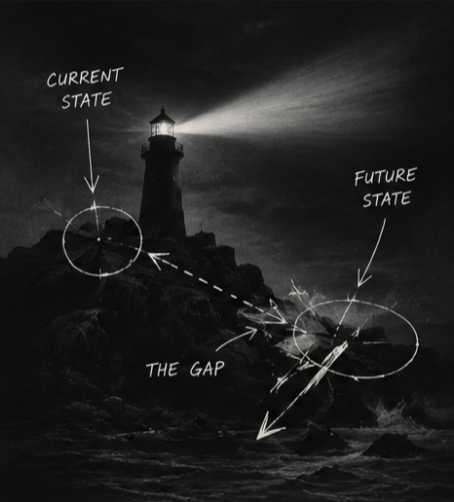
Name It.
The sounding board. Sometimes the most valuable thing is someone who can see what you're carrying and reflect it back clearly. One conversation can name what's been unnamed for years.
Learn More →
Fix It.
Open your compass. Get oriented to your North and your current terrain and plot your next steps. Not a theoretical plan, the actual next move given what you have, where you are, and what the market will bear.
Learn More →“Most businesses don't need more ideas. They need to see it, name it, and move with intent.”
Clarity is not comfortable. But confusion is expensive.
Ideas that challenge.
Stories that stick.
Ready to get your business in sight?
Let's talk about what's working, what's stuck, and what to do about it.